

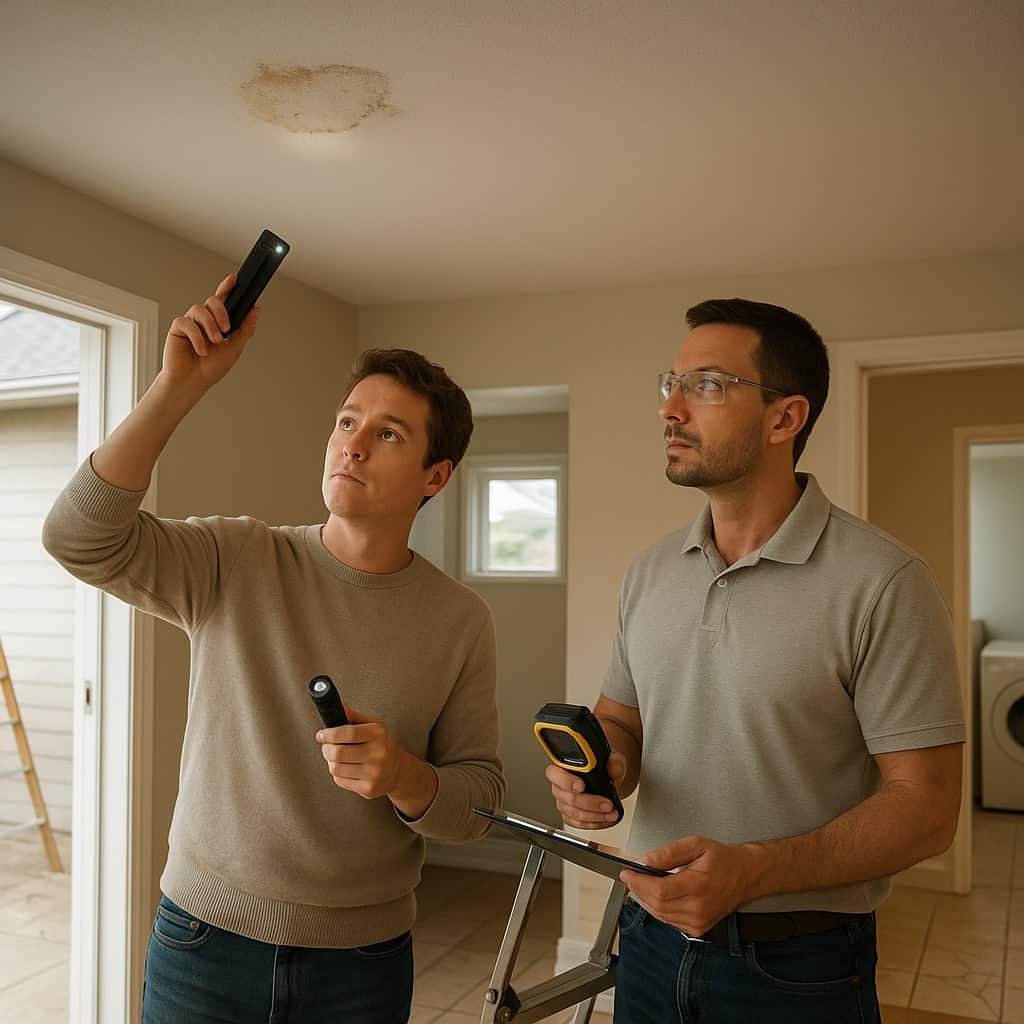
A DIY walk-through is a good habit, but it isn’t a full assessment. It shows you what is visible at arm’s length and helps you keep track of everyday changes. A professional assessment examines what may be hidden and gives you paperwork you can act on.
What a DIY inspection looks like in practice
You don’t need training to spot the obvious. Most of us notice a damp patch on a ceiling or paint that has started to blister and chalk. We also see a door that sticks after rain or a cracked tile in the laundry.
A typical DIY check stays at eye level and within easy reach. You walk inside and outside with a torch and a phone camera, looking at walls and ceilings for stains. You test taps and light switches, then take photos of anything that doesn’t look right.
That habit has real value for day-to-day upkeep, although it has clear limits. You can’t see inside wall cavities or under a sealed sub-floor. Without a meter, you can’t tell whether a stain is old and dry or fresh and spreading. There’s no roof void check if you won’t get on a ladder, and no way to confirm pests by sight alone.
Every homeowner eventually runs into that gap.
We tend to judge by appearance, so fresh paint or tidy silicone can conceal a lot. A DIY list also creates no formal record, which means it won’t carry much weight in a price discussion or an insurance query.
What a professional assessment has to cover
In Western Australia, a pre-purchase building inspection is normally scoped to AS 4349.1. That standard sets out what the inspector checks and how defects are reported. It covers accessible parts of the home and calls for checks of concealed zones where access allows. The focus is structural soundness and safety rather than decor or personal taste.
A licensed inspector will look at the roof cover and roof frame where there is safe access, as well as walls and footings for signs of movement. They check wet areas for waterproofing faults and look for timber damage. Paint is part of the assessment too, since blistering and chalking can point to damp in the substrate. Each fault is graded, photographed and tied to a location so you know what needs work now and what can wait.
Registration matters here too. In WA, inspectors work under Building and Energy rules, and reputable operators hold professional indemnity insurance. That insurance gives you a path to claim if a major defect that should have been identified gets missed. A DIY checklist provides no equivalent protection.
Why tools change what gets found
Sharp eyes can’t beat physics. Moisture behind tiles or inside a wall frame may show no clear sign until paint bubbles or skirting swells. By that stage, the repair is usually bigger. Inspectors use moisture meters and thermal imaging, along with borer probes and borescopes, to find damp and decay before those signs appear.
Termites are the classic Perth example. White ant activity often sits inside wall cavities or in sub-floor timbers where you may never see mud leads or wings. A thermal camera can reveal an unusual heat pattern that points to nesting, while a moisture meter can identify damp timber that termites favour. A probe then confirms whether the timber is soft. None of that is possible during a DIY walk-through with a torch.
Leaks tell much the same story. A shower can leak for months behind a wall with only a faint change in the grout to show for it, but a meter reading may tell a different story. Paint film failure adds another part of the picture, since blistering and chalking often mean water is getting behind the coating. Left alone, that damp can lead to rot in frames and damage to plaster.
There’s no practical DIY substitute for that equipment. You can buy a cheap meter online, but without training it is difficult to distinguish a genuine problem from false positives and cold spots.
Telling cosmetic damage from structural damage
This is where many DIY checks go wrong. Not every crack means structural movement, and a neat patch doesn’t prove that the wall is sound. Hairline render cracks are routine in Perth brick veneer after hot summers. They remain in the render and don’t step through mortar joints.
A stepped crack following mortar joints or a diagonal shear crack running across brickwork deserves closer attention. Those patterns can indicate that footings have moved or that moisture has changed the soil. Stepped cracking in brickwork needs a closer
look rather than a quick application of filler and paint. An inspector will check the crack’s width and direction, then consider its relationship to drainage and trees near the footings.
Concrete cancer is another problem that DIY reports often miss. In older homes and properties near the coast, steel inside concrete can rust. As it expands, it pushes the surface off in flakes and chips. Homeowners may patch it as a simple render issue, but the damage keeps returning because the steel is still rusting inside.
Previous renovations can hide the same sort of trap. A new bathroom laid over old waterproofing may look smart while water moves into the frame. A buyer sees fresh tiles, whereas an inspector tests for moisture and flex. The inspector will also read the fall to waste.
What it costs and why the paperwork matters
A combined building and pest report in Perth often costs between $400 and $800 for a standard home. That figure puts some buyers off. They compare it with a free weekend walk-around and decide to choose the free option.
Set that fee against the cost of one missed defect. Termite damage or concrete cancer repairs can run into tens of thousands of dollars, and failed waterproofing may not be far behind. Before buying, a building and pest inspection to AS 4349.1 is the right tool. Once you own the home, regular Property
Inspection Services Perth focused on maintenance can pick up peeling paint, timber rot, rust and early signs of water damage before they turn into larger repairs. Either way, you are paying for trained eyes and judgement, backed by documentation you can act on.
The report serves as formal proof as well. Under the Offer and Acceptance contract used for standard WA sales, building and pest conditions allow a buyer to discuss the price if major defects turn up. A dated professional report also carries weight in an insurance query. A DIY checklist doesn’t have the same standing and offers no claim path if something substantial gets missed.
Professional indemnity insurance supports that proof. If an inspector misses a defect they should have found, you have someone to go back to. That cover separates a documented assessment from an informal opinion.
Strata homes, older homes and safety risks
The limits of DIY checks become clear quickly in strata properties. Inside your unit, you can check paint and taps. You can’t inspect the roof, structural walls, common plumbing or waterproofing that sits with the owners corporation. Those shared areas can lead to large levies, so a professional review of the records and common property can pay for itself.
Perth has many pre-1987 homes containing asbestos in eaves, cladding, fencing and sheds. A homeowner can release fibres by drilling into or scraping a suspect sheet. Inspectors are trained to leave suspected materials undisturbed and note them for testing. Don’t cut or sand anything that might contain asbestos.
Safety risks extend beyond asbestos. Old wiring and open roof voids can catch DIY inspectors out, with live cables sometimes sitting beneath insulation or a cracked tile unable to take a person’s weight. A licensed inspector carries ladders and appropriate testers. They also know where not to step.
Paint often provides the first clue. Blistering and chalking may mean the surface was wet or that the preparation was poor. Inspectors consider those signs alongside moisture readings rather than treating them in isolation. That combined assessment stops owners from painting over damp that must be fixed first.
When to do it yourself and when to call in help
DIY and professional work are most useful when treated as a pair. Your own walk-around every three months helps keep small jobs small, while a professional check steps in at set points. That split keeps costs controlled without leaving major gaps in your cover.
Book a professional before buying or selling, after major weather, and every three to five years for condition reporting. Pre-purchase work supports your Offer and Acceptance clauses, while pre-sale work gives buyers proof and helps protect you if a claim arises later. Storm inspections catch lifted flashing and blocked gutters before the next rain. Periodic reporting tracks wear so you can plan painting and repairs.
Your own checks fill the spaces between those visits. Look at ceilings and walls after heavy rain for new stains, and test whether windows and doors close smoothly. Clear gutters, check downpipes and note any musty smell in cupboards. Keep dated photos.
Keep both sets of notes. Dated DIY photos and licensed reports can help with insurance queries, depreciation schedules, resale discussions and maintenance plans. A single missed defect
can cost more than decades of inspections. That file shows that you cared for the property and acted on professional advice.
How to get the most from a professional visit
You get more from a booking when you prepare properly. Clearing access to the roof void and sub-floor saves time. List any leaks and cracks you have noticed so the inspector can test those areas first.
Ask what is included before agreeing to the service. A standard pre-purchase scope should refer to AS 4349.1 and state whether pests are included or treated separately. Ask to see sample photos and request plain wording that distinguishes major faults from minor ones. Good reports avoid unnecessary jargon and provide clear next steps, such as seeking a further review by the relevant trade.
Use the report as a plan rather than a simple pass or fail. Start with safety concerns and water entry before moving to timber damage and general wear. Get quotes for the major items and set dates for smaller jobs. File the PDF with your settlement papers and photos so you have clear evidence of the property’s condition on that date if an insurer or future buyer asks.
The stakes remain high. CSIRO research estimates that termites cause more than $1 billion in damage to Australian homes and businesses each year (CSIRO).
Sellers benefit as well. A dated report shows what you knew and what you repaired before listing. That record helps if a buyer raises questions about paint or damp after settlement. It won’t prevent every discussion, but it demonstrates care.
DIY checks keep you familiar with your home. Professional checks protect you from problems you can’t see. Using both can reduce costs and worry over time, which makes that balance worth maintaining.